Introduction
Most crafters reach for satin ribbon at gift-wrapping time—then put it away. The rest of the year, those spools sit in a drawer doing nothing, their potential mostly untapped.
This guide changes that. Whether you work in florals, hairbow making, party décor, or fabric crafts, you'll find practical techniques here that go well beyond the bow. From narrow accent widths to wide decorative spools, satin ribbon can become the centerpiece of polished, professional-looking projects—not just the finishing touch.
Key Takeaways
- Satin ribbon's smooth, glossy surface and flexible structure make it suitable for crafts far beyond gift wrapping
- Works for home décor (wreaths, curtain tie-backs), wearable accessories (hairbows, earrings), and celebration crafts (gift toppers, floral embellishments)
- Match width to the project: 1/4"–5/8" for delicate accessories, 1.5"+ for structural décor
- Most projects only need scissors, fabric glue, and a lighter for sealing edges
- Quality ribbon (colorfast, with clean edges) makes a noticeable difference in how finished projects look and hold up
Why Satin Ribbon Is a Staple in Crafting
Understanding Satin's Craft-Friendly Properties
Satin ribbon earns its place in craft rooms through its distinctive physical properties. The smooth, shiny surface reflects light elegantly thanks to long "floats" of warp yarns over weft yarns, creating an unbroken surface that catches the eye. The soft body holds folds and curves without cracking, and it drapes naturally—essential for projects requiring fluid movement or dimensional shapes.
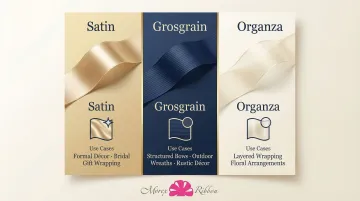
Comparing satin to other craft ribbons:
- Satin: Smooth, soft, fluid drape with a highly reflective glossy finish—ideal for formal event décor, bridal accessories, and luxury gift wrapping
- Grosgrain: Tightly woven with a ribbed texture, stiff and durable with a matte finish—better for structured hairbows, outdoor wreaths, and rustic décor
- Organza: Lightweight, thin, and airy with a sheer, translucent appearance—perfect for layered gift wrapping and ethereal floral arrangements
Width and Color Variety for Every Project
Satin ribbon comes in 18 widths and 197 colors, covering everything from narrow 1/8" accent ribbon to wide 2"+ decorative spools. That range means one ribbon type can serve dozens of different craft applications—from delicate jewelry accents to bold seasonal wreaths.
Width selection guide:
- Narrow (1/4"–5/8"): Fine detail work like bookmarks, earrings, and small bows
- Medium (7/8"–1.5"): Workhorse width for hairbows, curtain accents, and party favors
- Wide (2"+): Wreaths, large gift bows, and structural décor elements
Satin Ribbon Craft Ideas for Gifts and Celebrations
Satin ribbon elevates gift presentation beyond a simple bow. The global gift wrapping products market is projected to reach $20.6 billion by 2025, reflecting consumers' desire for premium presentation.
Layering multiple widths or colors across a wrapped box—a wide satin base ribbon with a narrow contrast ribbon on top—creates a dimensional, boutique-style finish without requiring advanced skills.
Gift Toppers and Decorative Bows
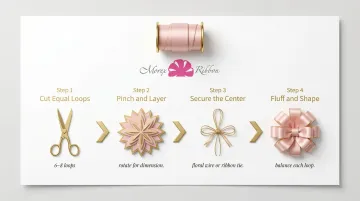
Creating a multi-loop gift bow using satin ribbon adds professional polish to any package:
- Cut equal loops from your ribbon (6–8 loops for a full bow)
- Pinch and layer loops in a starburst pattern, rotating each slightly for dimension
- Secure the center with floral wire or a small ribbon tie
- Fluff and shape individual loops for a balanced appearance
Wider ribbon (1.5"–2") creates fuller, showstopper bows perfect for large gifts, while narrow ribbon (3/8"–5/8") makes delicate, refined toppers for smaller packages or favor boxes.
Ribbon-Wrapped Party Favors
Transform plain favor bags, boxes, or jars into memorable keepsakes:
- Tie satin ribbon around small favor containers, matching ribbon color to your event's theme
- Add a small ribbon flower or bow to the knot for elevated presentation
- Use double-sided satin for tie-backs and bows where both ribbon surfaces are visible
- Consider washable, colorfast ribbon for favors guests might reuse (like fabric gift bags)
For weddings and baby showers, coordinating ribbon color to your palette ties each favor into the broader décor effortlessly.
Satin Ribbon Flower Embellishments
Simple satin ribbon flowers add finishing details to gifts, bouquets, and centerpieces:
- Cut a length of ribbon (12"–18" depending on desired flower size)
- Gather or fold the ribbon in a spiral pattern
- Secure the base with a few stitches or a dab of glue
- Attach to your project using hot glue or by stitching through the base
These flowers pair naturally with bridal and baby shower gifts—match the ribbon color to your event palette for a cohesive, intentional finish.
Ribbon-Tied Treat Bags and Favor Cones
Create quick, high-impact party favors:
- Fold cellophane or kraft paper into a cone shape
- Fill with treats, candies, or small gifts
- Seal with a generous length of satin ribbon tied into a bow at the top
- Add a small tag or ribbon-tied charm to personalize each favor
This technique is ideal for party planners and anyone making handmade holiday gifts—it looks polished and takes under five minutes per favor.
Satin Ribbon Craft Ideas for Home Décor
Satin ribbon adds a polished, intentional look to home spaces without requiring major materials or tools. The global DIY home décor market is projected to reach $372.06 billion by 2031, reflecting growing consumer interest in handmade home accents. Ribbon width and color are the two variables that determine whether a project reads as subtle accent or bold statement — so choose both with your space in mind.
Satin Ribbon Wreaths
Two popular approaches create different aesthetic effects:
Fluffy, textured wreath:
- Tie short lengths of ribbon (4"–6") in loops onto a wire wreath frame
- Vary ribbon colors for dynamic, multi-tonal effect
- Continue until the frame is fully covered
Sleek, uniform wreath:
- Wrap ribbon in tight spirals around a foam or wire base
- Secure with pins or hot glue as you work
- Overlap slightly for complete coverage
Multiple coordinating satin colors produce far more visual interest than single-color wreaths — and both styles translate easily to seasonal or holiday themes.
Curtain Tie-Backs and Trim Accents
Wide satin ribbon (1.5"–2") functions beautifully as curtain tie-backs:
- Loop and tie the ribbon around a gathered curtain panel
- Attach to a wall hook at the desired height
- Use double-face satin since both ribbon sides are visible
For curtain trim, glue or hand-stitch narrower satin ribbon along the bottom hem of plain curtains to add a decorative border. A 3/8" or 5/8" ribbon in a contrasting color works especially well for this border effect.
Ribbon Coasters
Create functional, decorative coasters:
- Start at the center and wrap satin ribbon tightly in a flat coil
- Secure each layer with fabric glue as you work outward
- Continue until the coaster reaches your desired size (typically 4"–5" diameter)
- Seal the surface with a coat of clear polyurethane or Mod Podge for protection
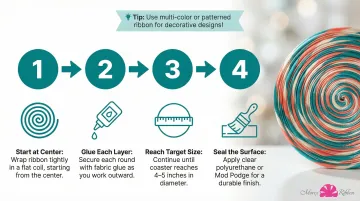
Using multiple ribbon colors in a planned sequence creates patterned, intentional designs. These make thoughtful handmade gifts or personalized home accents.
Decorative Box Lids and Storage Accents
Ribbon turns plain storage boxes into display-worthy accents:
- Wrap satin ribbon around lid edges, securing with fabric glue
- Finish with a bow or flat ribbon knot on top
- Use coordinating colors for organized craft supplies or themed storage
This technique works well for keepsake boxes, wedding card boxes, and decorative display containers.
Satin Ribbon Craft Ideas for Wearable Accessories and Fashion
Satin ribbon's soft drape, smooth finish, and light weight make it a natural fit for jewelry and hair accessories — comfortable against skin without pulling or weighing pieces down.
Hairbows and Headbands
The kids' hair accessories market was valued at $1.5 billion in 2024 and is forecasted to grow at a 7.5% CAGR through 2033, reflecting strong demand for quality hair accessories.
To create a basic looped hairbow:
- Fold ribbon into loops (typically 2–3 loops per side)
- Secure center with a smaller ribbon wrap
- Attach to a hair clip or elastic base
- Trim and seal ribbon ends
To elevate a plain headband:
- Wrap the headband fully in satin ribbon, securing with fabric glue
- Add ribbon flowers or bows at the side for decorative accent
- Use 7/8″ to 1.5″ widths for best proportion
Choose colorfast ribbon to ensure bows hold their color with regular wear. Morex Ribbon's washable Swiss Satin is an ideal choice for accessories that need to stay looking fresh — machine washable up to 140°F/60°C.
Ribbon Earrings
Satin ribbon earrings are easy to make and far lighter than most metal or beaded alternatives:
- Fold ribbon into teardrop or loop shapes
- Secure the base with a small dab of fabric glue
- Attach to earring hooks using jump rings
- Create layered effects for fringe-style statement drops
The variety of satin widths allows for everything from delicate studs to bold statement pieces. Seal all cut edges to prevent fraying.
Satin Ribbon Bookmarks
Transform a simple length of ribbon into personalized bookmarks:
- Cut ribbon to desired length (typically 8″–10″)
- Seal edges with a lighter or fray-check solution
- Optional: add a small charm, tassel, or ribbon flower at one end
- Optional: personalize with fabric markers or embroidery
A 5/8″ or 7/8″ width works well — wide enough to see at a glance, narrow enough not to bend pages.
Pro Tips for Getting the Best Results with Satin Ribbon
Always Seal Cut Edges Immediately
Satin ribbon frays easily due to its delicate weave structure. Seal cut ends immediately after cutting:
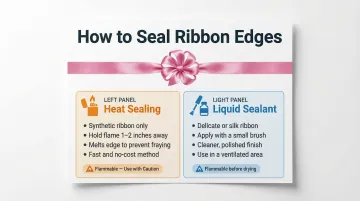
- Heat sealing (for synthetic ribbon): Lightly pass the cut edge over a candle flame or lighter until the edge melts slightly. Keep the flame 1–2 inches away to prevent blackening.
- Liquid sealant (for delicate or natural silk ribbon): Apply fabric fray sealant with a small brush for a cleaner finish. Note that liquid sealants are flammable before drying and should be used in ventilated areas.
Match Ribbon Width to Project Scale
Using the wrong width is the most common reason ribbon crafts look off-proportion:
- Narrow (1/4"–5/8"): Fine detail work like bookmarks, earrings, and small bows
- Medium (7/8"–1.5"): Workhorse width for hairbows, curtain accents, and party favors
- Wide (2"+): Wreaths, large gift bows, and structural décor elements
Consider the finished project size when selecting ribbon width—larger projects need wider ribbon for visual balance.
Choose Quality That Matches the Application
For crafts that will be worn, washed, or handled frequently—hairbows, clothing accents, keepsake items—look for colorfast and machine-washable satin ribbon. The Oeko-Tex Standard 100 certification tests textiles for over 1,000 harmful substances, with stricter requirements for Product Class I (babies and children up to 36 months) and Class II (items in direct skin contact).
Certified ribbons—like those in Morex Ribbon's line, which are all tested to Oeko-Tex Standard 100—confirm that colorants are safe for skin contact. This matters most for children's accessories, baby products, and wearable keepsakes. The 2026 standards introduce tighter traceability requirements and expanded substance limits, so checking for certification before buying is a practical step, not just a precaution.
Frequently Asked Questions
What width of satin ribbon is best for making bows?
Width depends on bow size and application. Use narrower widths (3/8"–5/8") for small, delicate bows on favor boxes or gift tags. Choose wider widths (1.5"–2") for full, showstopper gift-topper bows. The length of ribbon used also affects fullness—longer loops create more dramatic bows.
How do you keep satin ribbon from fraying after cutting?
Quickly pass the cut edge through a lighter flame to melt and seal synthetic ribbon, or apply fabric fray sealant (like Fray Check) with a brush for a cleaner finish on delicate ribbons. Heat sealing works only on synthetic ribbon — natural silk will catch fire.
What's the difference between single-face and double-face satin ribbon?
Single-face satin is shiny on one side and matte on the other, making it better for projects where only one side shows (like wrapped coasters or flat applications). Double-face satin is glossy on both sides and is preferred for curtain tie-backs, hairbows, or anything where both ribbon surfaces are visible.
Can satin ribbon be glued instead of sewn?
Yes, fabric glue or a low-temperature hot glue gun works well for most ribbon crafts. Hot glue is faster for structural projects like wreaths, while fabric glue gives a cleaner, flexible bond for flat applications like coasters or curtain trim. Use low-temp glue guns (max 250°F) to prevent melting synthetic ribbon.
How do I make satin ribbon flowers as a beginner?
Cut a length of ribbon (12"–18") and run a gathering stitch along one edge. Pull the thread to gather the ribbon into a ruffled coil, then secure the base with a few stitches or a drop of glue. Wider ribbon creates larger, fuller flowers suitable for gift toppers and centerpieces.
Can satin ribbon be used for outdoor decorations?
Standard satin ribbon is not weather-resistant and can be damaged by moisture and prolonged sun exposure. For short-term outdoor use (a few hours at an event), it holds up fine. For longer displays, choose UV-stabilized or wired polyester ribbon designed for exterior use.